
BMW OS X
BMW + MINI OS 8

Role: Led design of rear seat entertainment UI for BMW OS X (Neue Klasse) and architected the underlying themeless design system.
Focus: Automotive HMI · multi-brand design systems · in-car interaction across multiple screens · design leadership and mentorship · stakeholder-heavy design process
Team: Lead (me), 2–3 Junior Designers, plus close collaboration with Design Leadership, UX research, product, engineering, brand, sound, hardware, and the wider OS X program. Stakeholder set spanning BMW, MINI, and Rolls-Royce.
Result: Accelerated UI/UX delivery by 3× (from weeks to days per feature) by unifying both teams on a single themeless component library and shared design gates, and delivered a single system that works across brands (BMW, MINI, RR) and themes (Light, Dark, Personal, etc.)
Production UI is under NDA. Visuals are official BMW press materials.
Overview
BMW's in-car software is set to transform with the rollout of OS X across the entire model range starting late 2025.
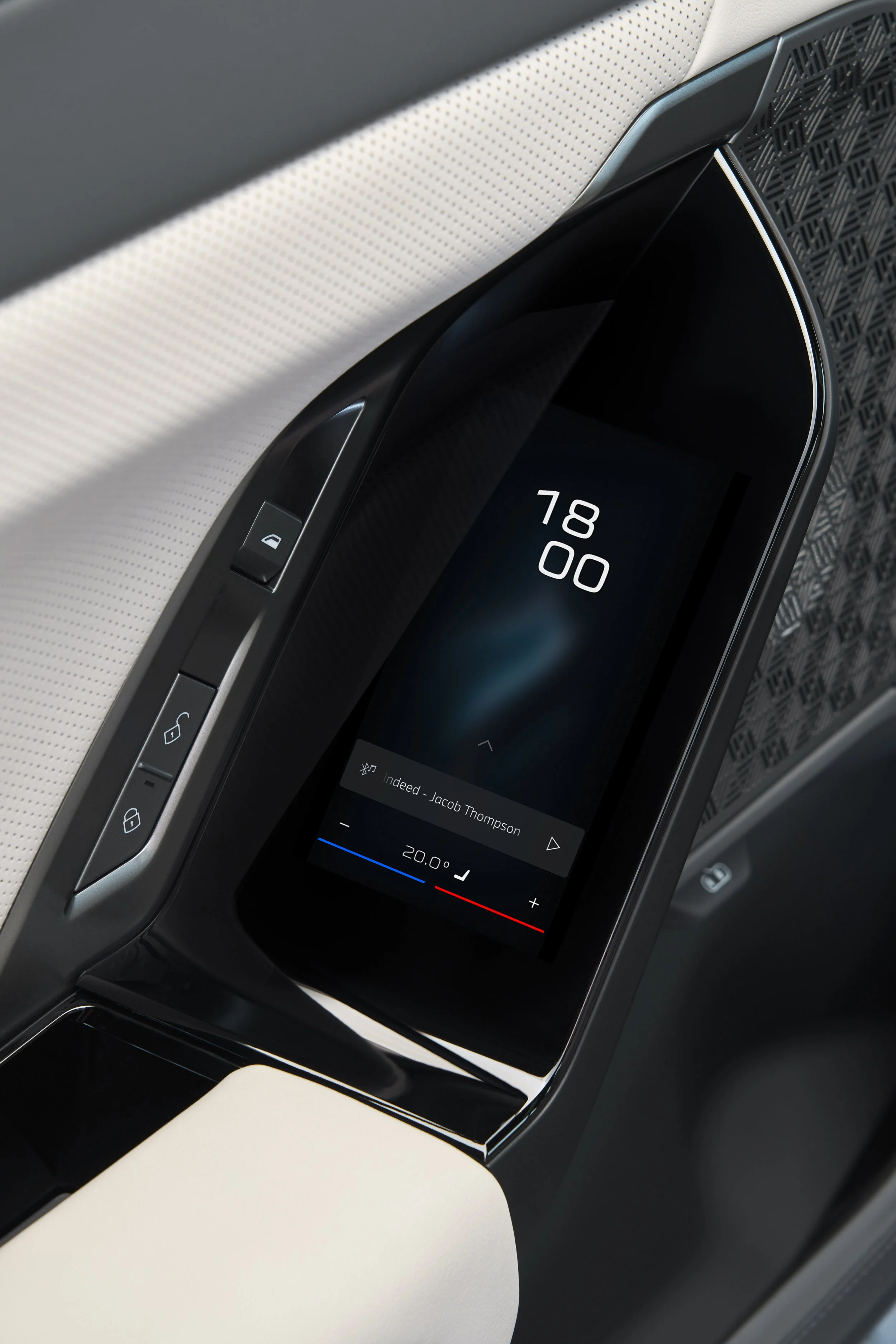
I led the design for rear seat entertainment surfaces, including door and theatre screens, guiding a team of 2–3 junior designers to create an outstanding user experience.
I developed a themeless design system for ensuring cohesive rear seat design across BMW, MINI, and Rolls-Royce.
Additionally, I contributed to the OS X infotainment system by addressing gaps in driver-first designs with insights from rear seat patterns.
Challenge
BMW's in-car software is set to transform with OS X rolling out across the entire model range starting late 2025.
Neue Klasse meant rethinking how passengers and drivers use the car, not porting over the existing setup. A scaled-down driver interface would've left passengers with a worse experience by default — the question was what to carry over and what to rebuild.
The system also had to work across three brands — BMW, MINI, Rolls-Royce — without forcing one visual language onto all of them. Designing separately per brand meant duplicated work and drift over time.
Underneath both problems sat an organisational one: UI and UX had been working in separate tracks, which slowed everything down.
Approach
Rear seat entertainment, what I led
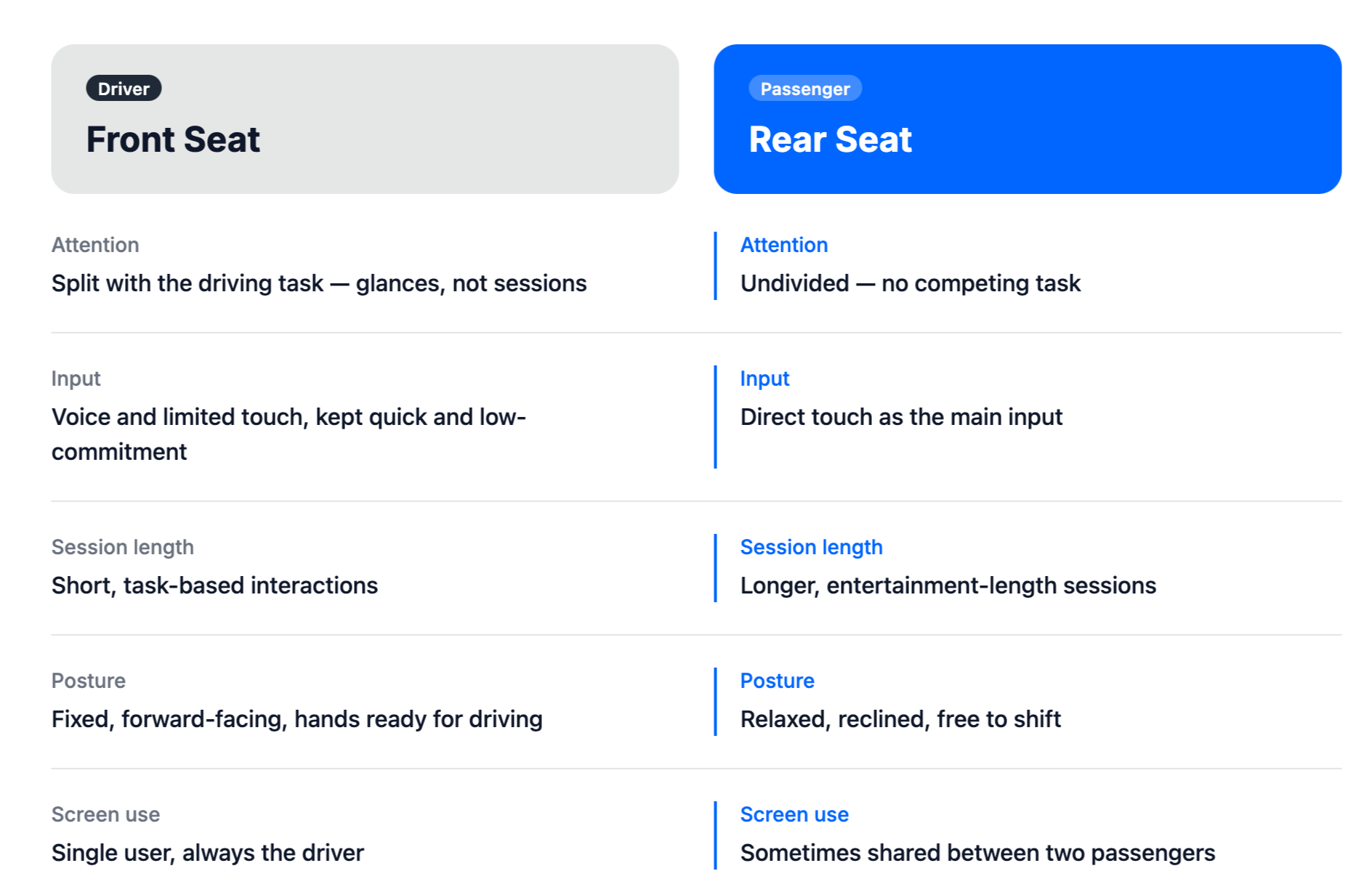
I designed the rear seat for passenger context first, then coordinated visually with the front. The two experiences don't inherit from each other in any straightforward way:
Sometimes shared between passengers
No driving task competing for attention
Screens free to answer what passengers actually ask of a rear seat display, rather than the driver's questions shrunk down
I set the design direction for door and theatre screens, critiqued the junior designers' work, and held the line on coherence during production.
The themeless system, what I led:
Every layer had to be decided: what belongs in the shared foundation, what belongs in the brand theme on top.
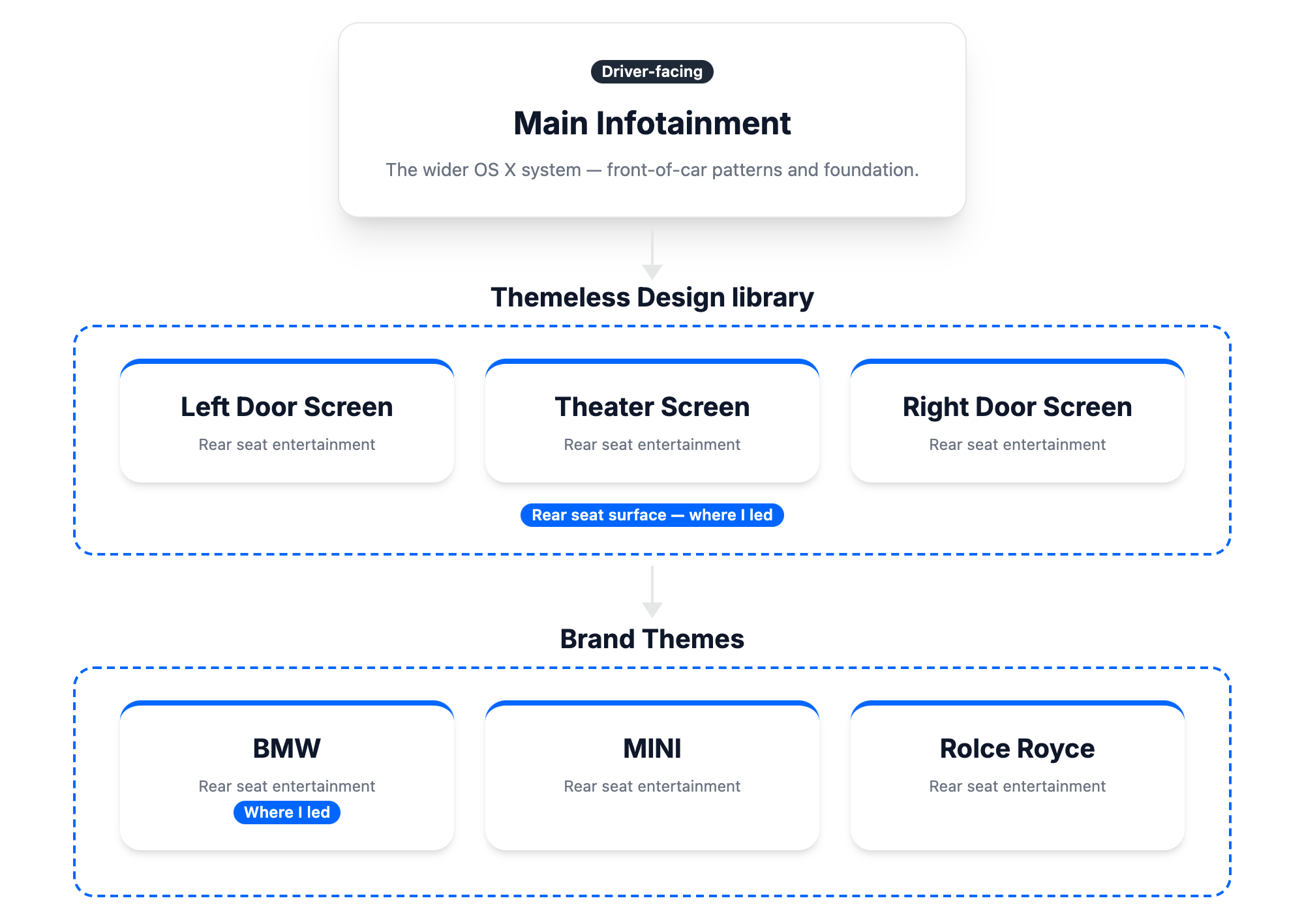
Foundation: structure, layout behaviour, interaction patterns, token architecture, motion, accessibility rules. Constant across BMW, MINI, and Rolls-Royce.
Themes: the brand expression layer: colour, typography, iconography, sound signature, the ambient qualities that make a BMW feel like a BMW and a Rolls-Royce feel like a Rolls-Royce.
Applications: the rear seat surfaces themselves, styled through the brand themes on top of the shared foundation.
Built by 2–3 designers alongside the screen work itself, so the system stayed grounded in real use rather than becoming documentation for its own sake. Governance tracked library usage and set design gates for new features, which is what kept adoption from decaying as the system scaled.
Contributor work on the wider OS X system
Alongside the RSE lead role, I contributed to the main OS X infotainment design system.
Ensuring consistent implementation via design gates and regular sync with feature teams.
Scoping and ideation of design vision up to production and implementation
Component implementation.
Design pattern creation.
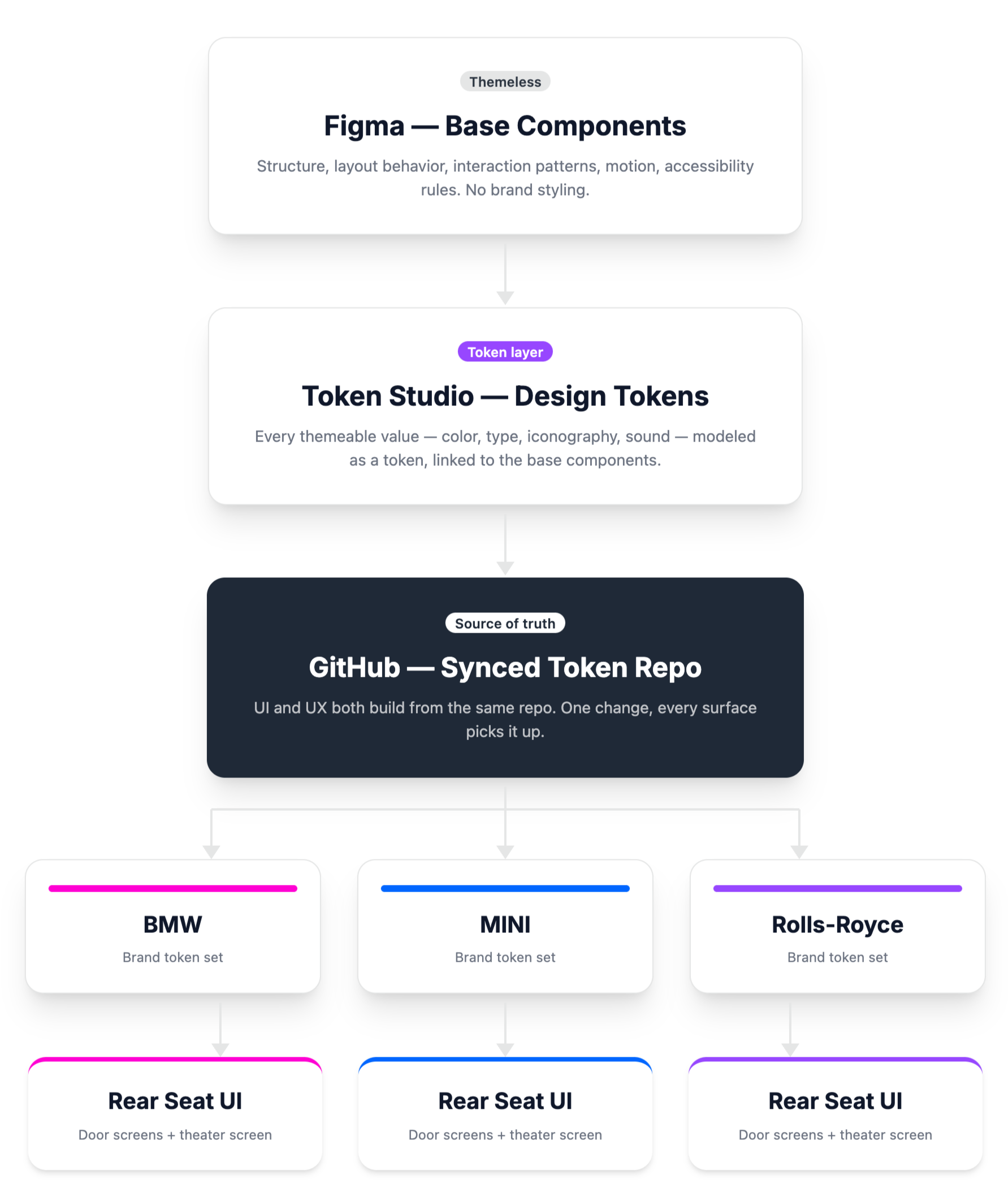
Token creation and sync to GitHub to enable themes and custom design across brands like BMW, MINI and RR
Key Decisions
One themeless system, not three brand systems. A single foundation with brand themes on top kept the three brands coherent without duplicating work per brand.
Rear seat for passengers, not a smaller front. The passenger and driver experiences differ enough that porting the front-seat interface down would have shipped a worse product by default.
Design gates over documentation. New features have to align with the system before implementation; a gate, not a guideline, is what kept adoption real.
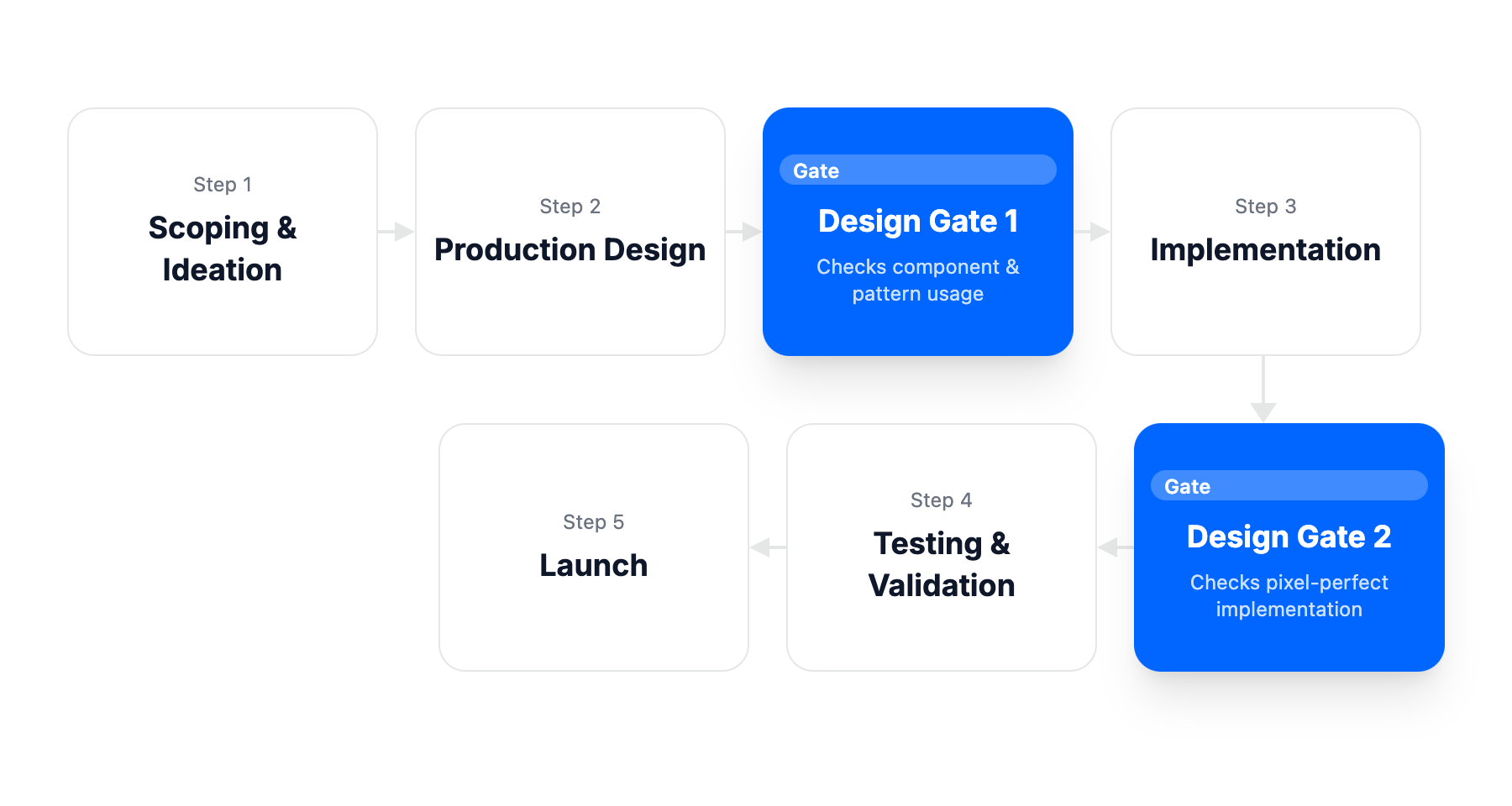
Stakeholders in the loop the whole way. BMW design decisions touch a wide stakeholder set; early alignment and regular check-ins cut down on rework later.
Tradeoffs
-
Challenge
BMW, MINI and Rolls-Royce all needed unique identities while sharing one underlying design language.
Tradeoff
A completely shared system would improve scalability but reduce brand differentiation. Independent systems would strengthen each brand but dramatically increase maintenance costs.
Decision
Created a universal, theme-less component system while allowing brands to express themselves through theming, motion, color, typography and content.
-
Challenge
Components needed to support future vehicle features that hadn't yet been defined.
Tradeoff
Highly flexible components often become difficult to understand and maintain.
Decision
Designed configurable components around common interaction patterns instead of supporting every theoretical scenario.
Individual brands and product teams were enabled to create custom components.
-
Challenge
Large displays enable richer interfaces but also increase cognitive load.
Tradeoff
More information improves discoverability but can negatively affect usability.
Decision
Prioritized progressive disclosure, stronger hierarchy and contextual actions.
Outcome
Rear-seat entertainment surface, door screens and theatre screen, shipped as part of the Neue Klasse launch.
Themeless design system supporting BMW, MINI, and Rolls-Royce from one foundation, without forking.
Roughly 3× reduction in UI/UX sync time, from weeks or months per feature to days or one to two weeks.
Team of 2–3 junior designers led across both the screen work and the system work.
Design gates and stakeholder governance in place to keep the system adopted as it scales.
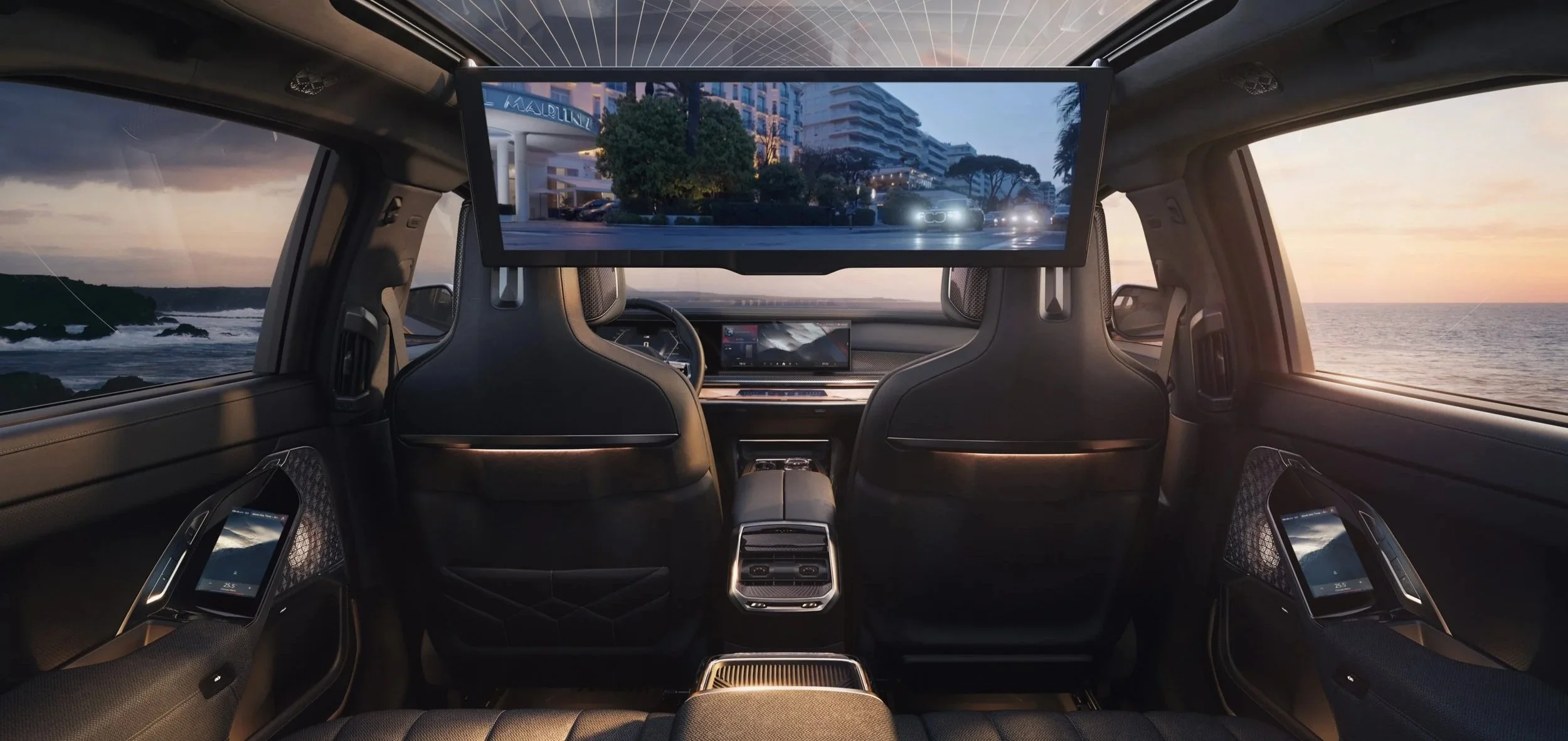
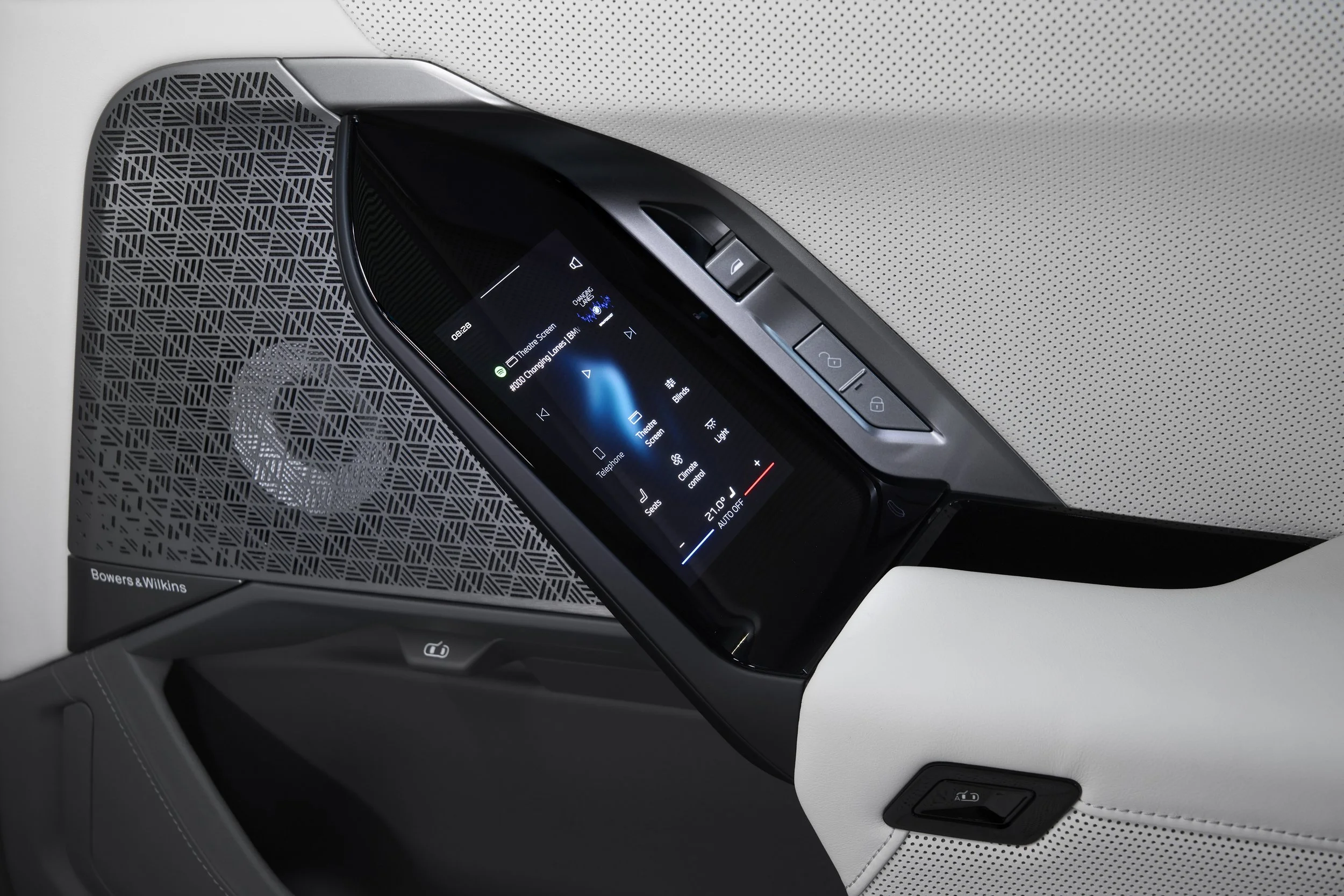
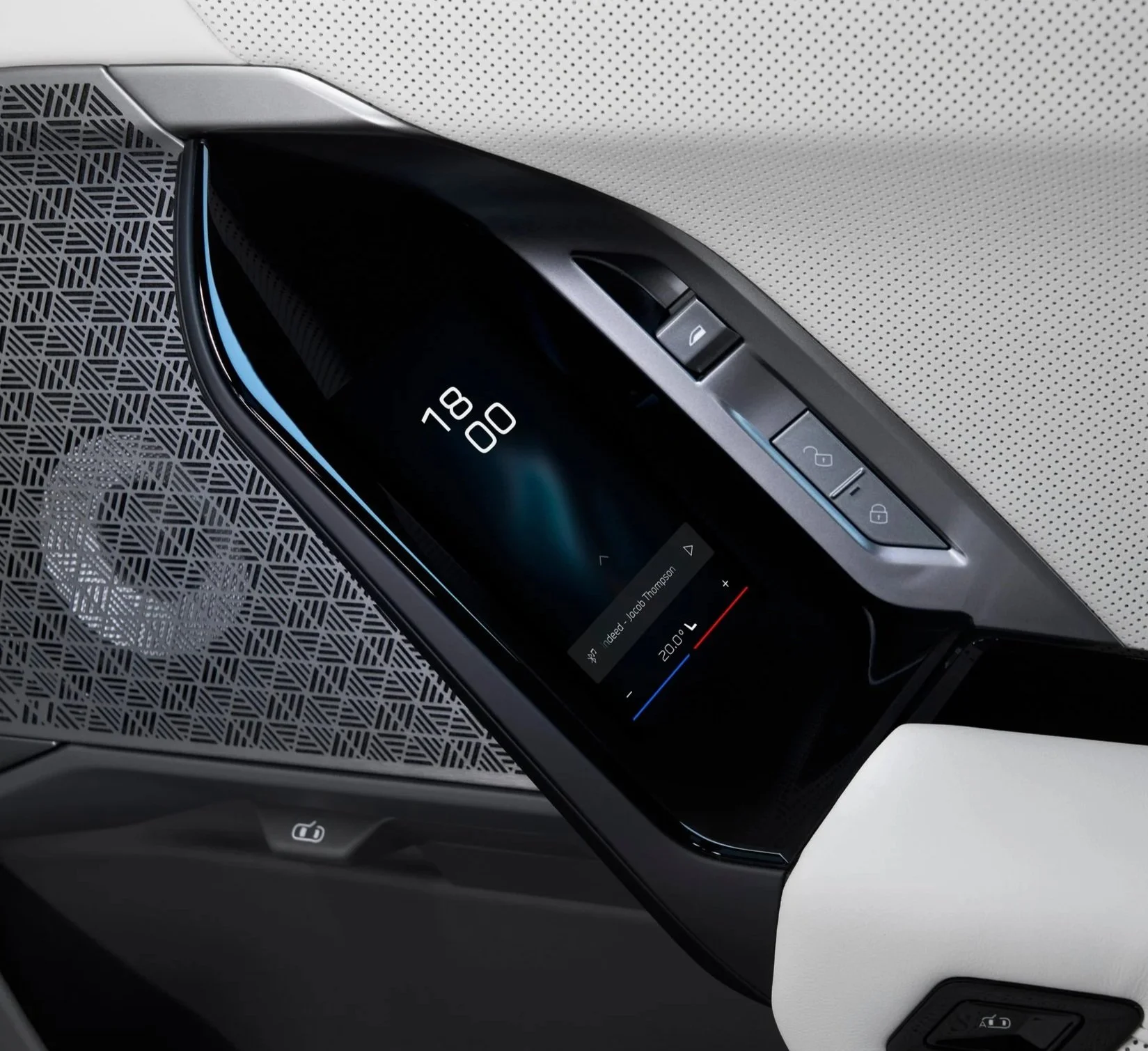
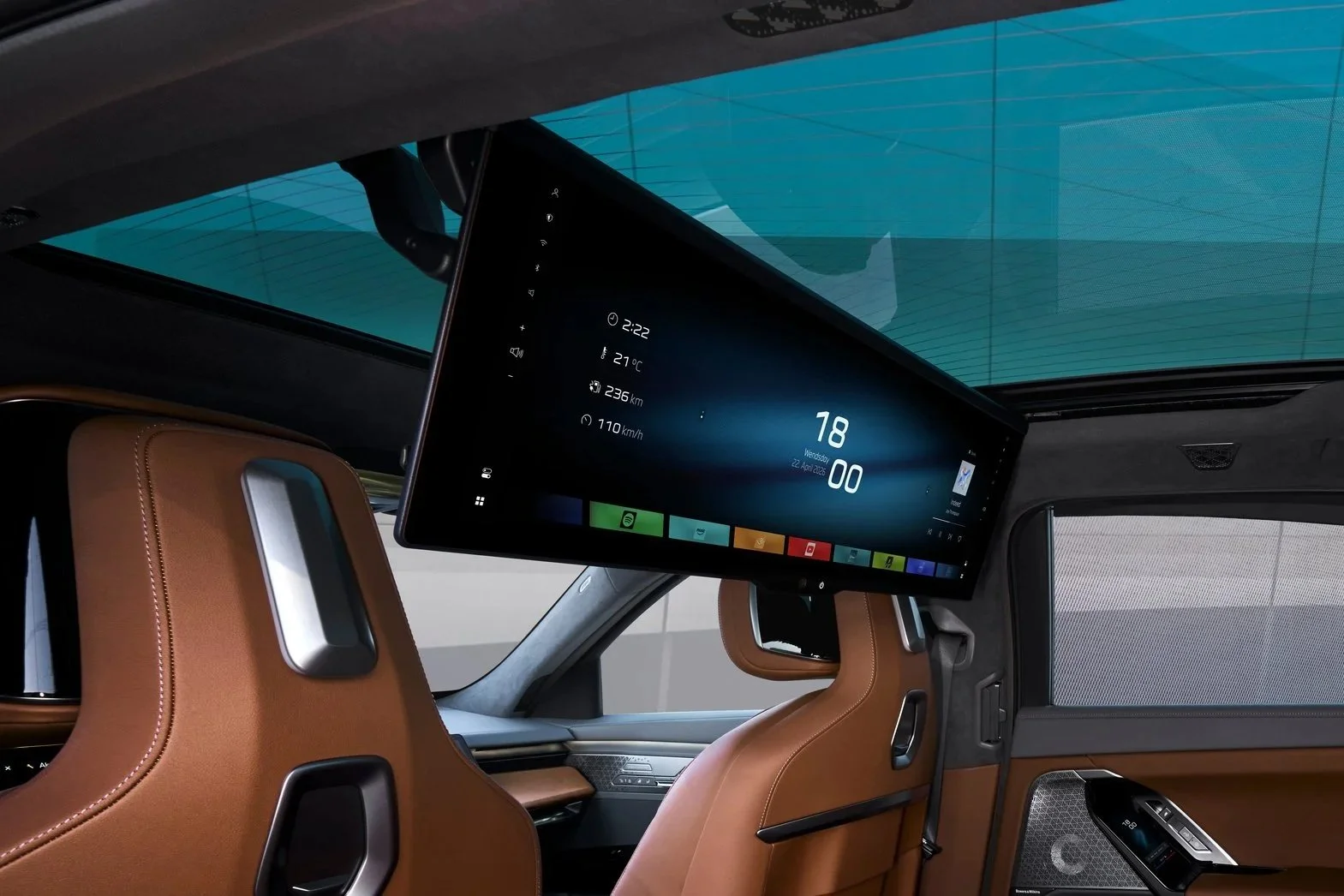
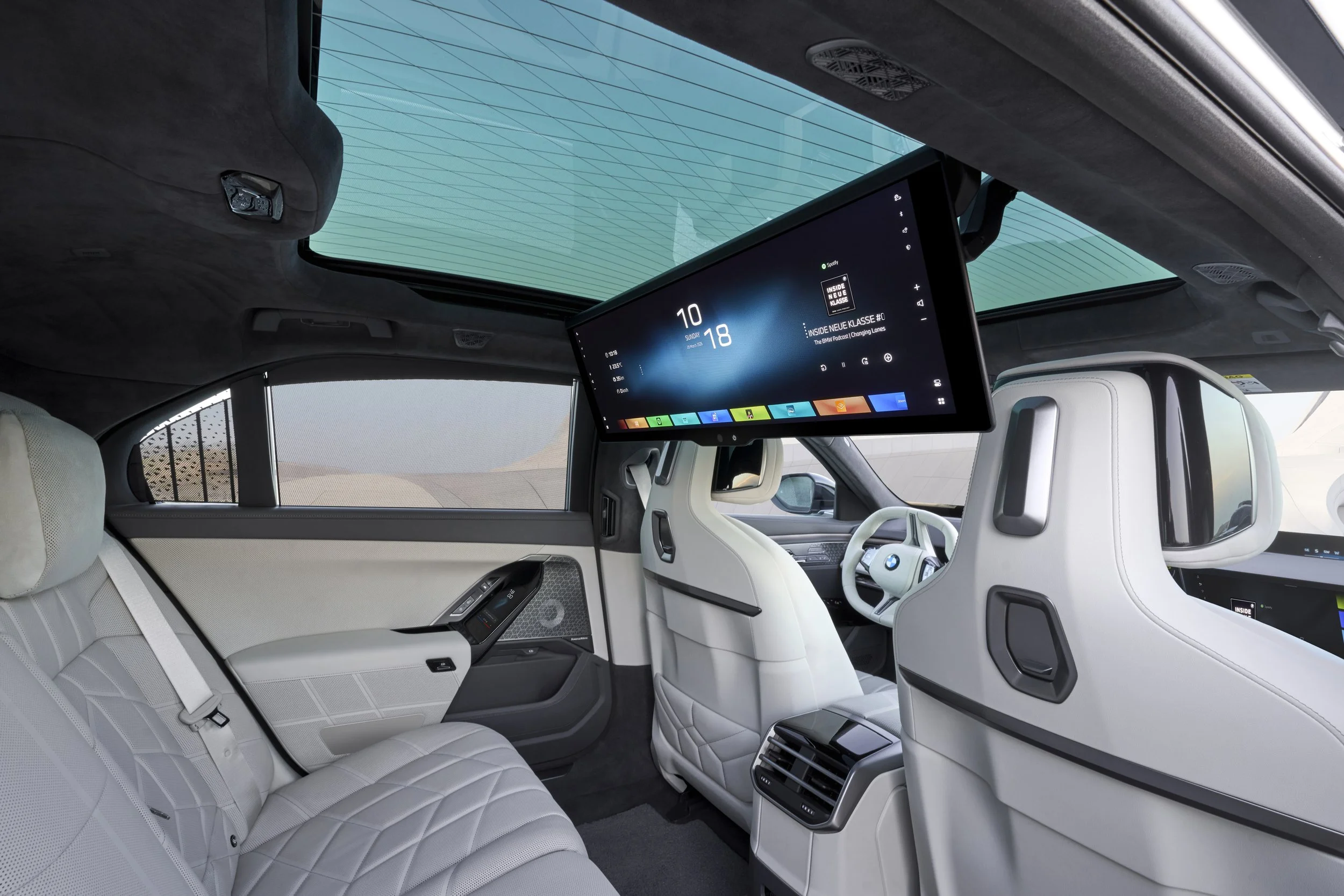
Production UI is under NDA. Visuals are official BMW press materials.