
GalleryTalk

Designing a Mobile-First Platform for Virtual Art Exhibitions
Freelance • Product Designer • Ongoing
End-to-end redesign of GalleryTalk, from acquisition and onboarding to creator tools and immersive virtual galleries. Designed in an AI-native workflow.
The Challenge
GalleryTalk already had passionate artists, but the experience created too much friction before users reached their first exhibition. Through a full UX audit, I identified four recurring issues:
Value proposition wasn't immediately clear
Onboarding asked too much too soon
Desktop-first interactions despite 80%+ mobile traffic
Gallery editing interrupted creative flow
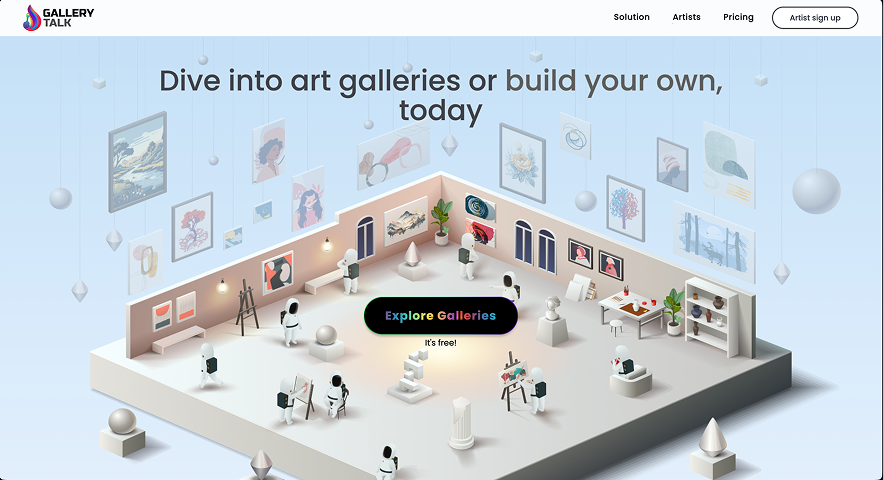
Legacy Website
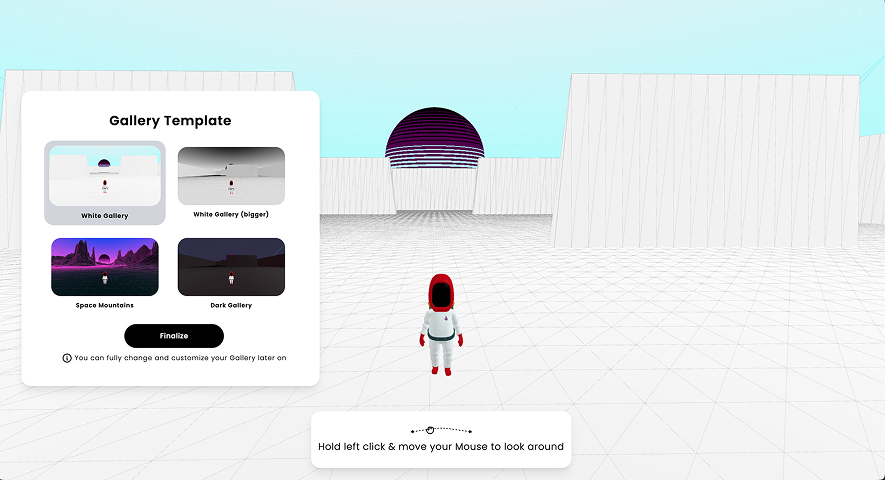
Legacy Gallery
Design Strategy
Before designing solutions, I mapped every friction point across the product.
The audit uncovered a recurring pattern: users were making too many decisions before experiencing any value.
These findings shaped four design principles that guided every product decision:
Spatial UI
No floating toolbars; upload and edit interactions live on the gallery wall, where the art will actually hang.
Mobile First
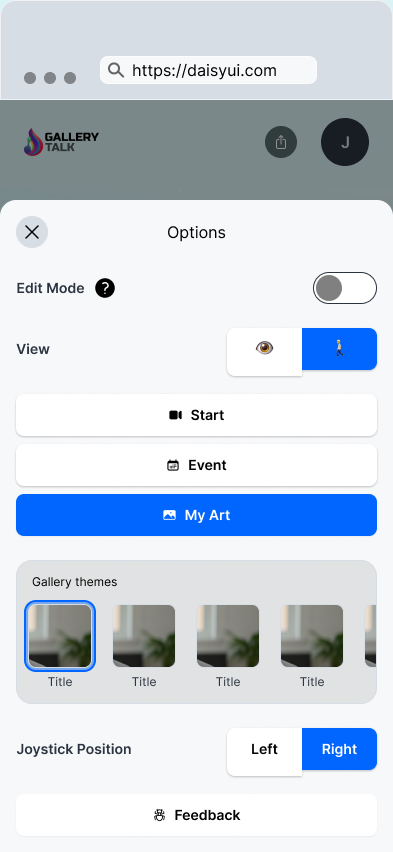
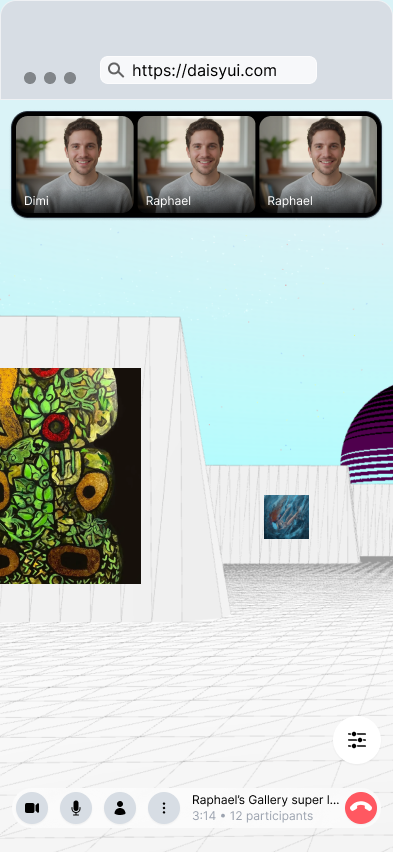
80%+ of visitors were on mobile. Every flow- upload, edit, walkthrough- was built for touch-first, desktop-second.
Key Product Decisions
Moved the homepage message from 'here's our tech' to 'here's your gallery'. Clearer value, better conversion.
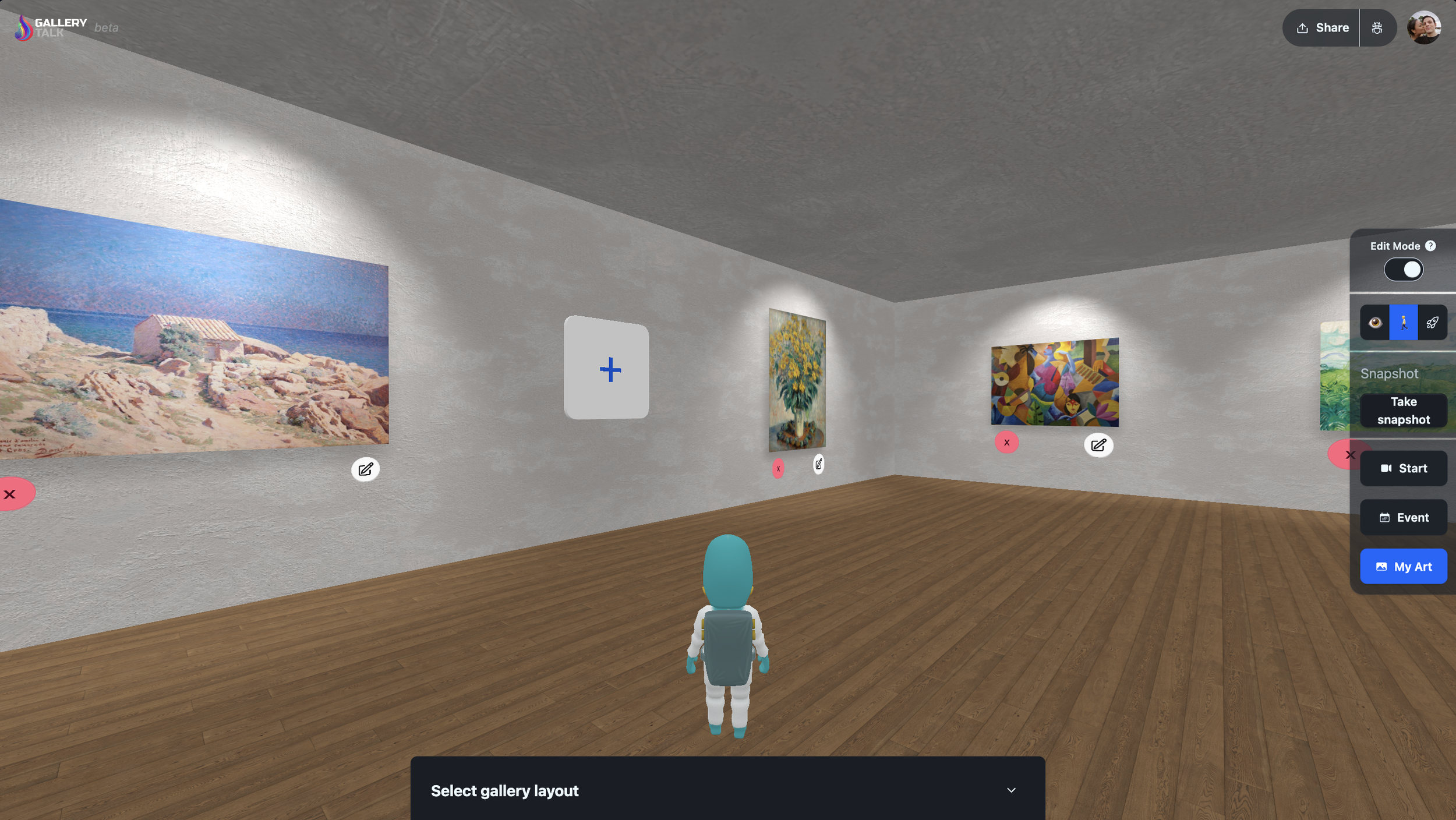
Editing tools appear only when you're near the wall you're editing, no separate edit mode breaking the 3D space.
Tradeoffs
-
Challenge
Create immersive virtual galleries that stay smooth across a wide range of devices.
Tradeoff
High-fidelity environments improve immersion but increase load times and hardware requirements.
Decision
Kept full detail on the artwork and the walls immediately around it, that's what sells the room, and simplified everything else: lower-poly floor, ceiling geometry, baked instead of dynamic lighting, compressed background textures.
Full detail everywhere would've been more impressive in a demo and unusable on a mid-range phone.
-
Challenge
Artists wanted deep customisation; most visitors had never built a virtual space before.
Tradeoff
More configuration options give power users flexibility, but the same options make the editor intimidating for a first-time visitor trying to hang three pieces of art.
Decision
Shipped with sensible defaults so a new user could publish a gallery without touching a settings panel, then tucked advanced customisation one level down for artists who wanted to push it."
-
Challenge
Visitors needed to feel like they were in the gallery together, without the space turning into a social app.
Tradeoff
Rich avatar interactions: chat, emotes, profiles, boost engagement, but pull attention off the art and onto each other.
Decision
Kept presence to the minimum that makes a room feel shared: you can see another visitor's avatar and where they're looking, and move and gesture near them: no chat, no profiles, nothing that turns the gallery into a lobby.
Validation
We continued validating after launch
Cutting gallery creation from 6 steps to 2, alongside a rebuilt site and campaign, doubled new signups in 3 weeks versus 4 weeks for the prior campaign.
Post-launch data validated the approach: acquisition cost stayed low, so the constraint sat further down the funnel.
63% of galleries got filled with art, up from 20-25%.
Sharing sat at 1%, despite users staying active elsewhere in the product. That confirmed activation, not onboarding, as the real lever for the next round.
AI accelerated exploration and developer collaboration, allowing us to prototype and validate ideas much faster. Combined with custom analytics leveraged by Claude after launch, this enabled continuous iteration based on real user behaviour rather than assumptions.
With real feedback coming immediately:
Outcome
This project reinforced that momentum matters more than features. Every unnecessary decision delayed users from experiencing the value of the platform. By simplifying acquisition, onboarding and gallery creation, we created an experience that feels immediate while leaving room to evolve through continuous user feedback.