
SAP Warehouse Operator
A native mobile app that puts the power of SAP's Extended Warehouse Management into the phone in your pocket.
Role: Lead Designer - owned product vision, research strategy, stakeholder alignment, user experience, and delivery. Led the design effort across discovery through release, mentoring junior designers and collaborating with product, engineering, SAP customers, and Apple.
Focus: Enterprise UX/UI · Mobile · Barcode, QR & text scanning · AR
Team: Design Lead (my role), 1 to 2 Junior Product Designers, PO, Engineering Team, SAP Customer Stakeholders
“The goal wasn't rebuilding EWM. It was answering what could make people switch from a system they'd relied on for years.”
Overview
SAP's Extended Warehouse Management (EWM) runs the back end of warehouses for an estimated 70–80% of the world's 500 largest companies. It's powerful, endlessly customizable, and handles nearly everything a modern warehouse needs, but it lives behind dated, browser-based screens and bulky handheld "laser-gun" scanners.
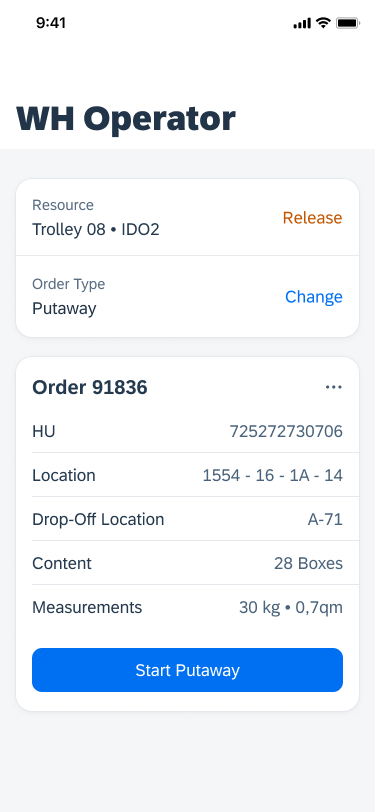
I led the design of The Warehouse Operator, a native mobile app that brings EWM's full capability to a phone, leveraging its camera, processing power, and familiar, intuitive interface to do what the old hardware never could.
The goal was simple to state and hard to earn: give warehouse operators a genuine reason to leave a decade-old system behind.
Challenge
SAP's Extended Warehouse Management powered warehouse operations for many of the world's largest companies. The system already worked and customers had invested years into their workflows.
The challenge wasn't redesigning EWM.
The challenge was creating enough value for customers to abandon familiar hardware and workflows in favor of a completely new mobile experience.
This required balancing customer expectations, technical constraints, and business objectives while preserving the flexibility that made EWM successful.
The legacy system had remained largely unchanged for more than two decades, creating significant usability, onboarding, and accessibility challenges for operators.
Speaking with operators surfaced four pain points that the existing setup never solved:
Usability — EWM is old and overlooks many now-standard usability principles
Accessibility — essentially non-existent
Hardware — the scan guns are large and unintuitive
Speed — entering data and scanning is slow
Beneath all of it sat the deeper challenge: understanding exactly what EWM could do, how customers actually used it day to day, and which data I could pull through existing APIs to deliver something measurably better.
Stakeholder Alignment and priorities:
SAP product leadership
Engineering teams
Existing enterprise customers
Warehouse operators
Apple design and platform specialists
Many decisions involved navigating competing requirements while maintaining a clear product vision focused on adoption and usability.
Approach
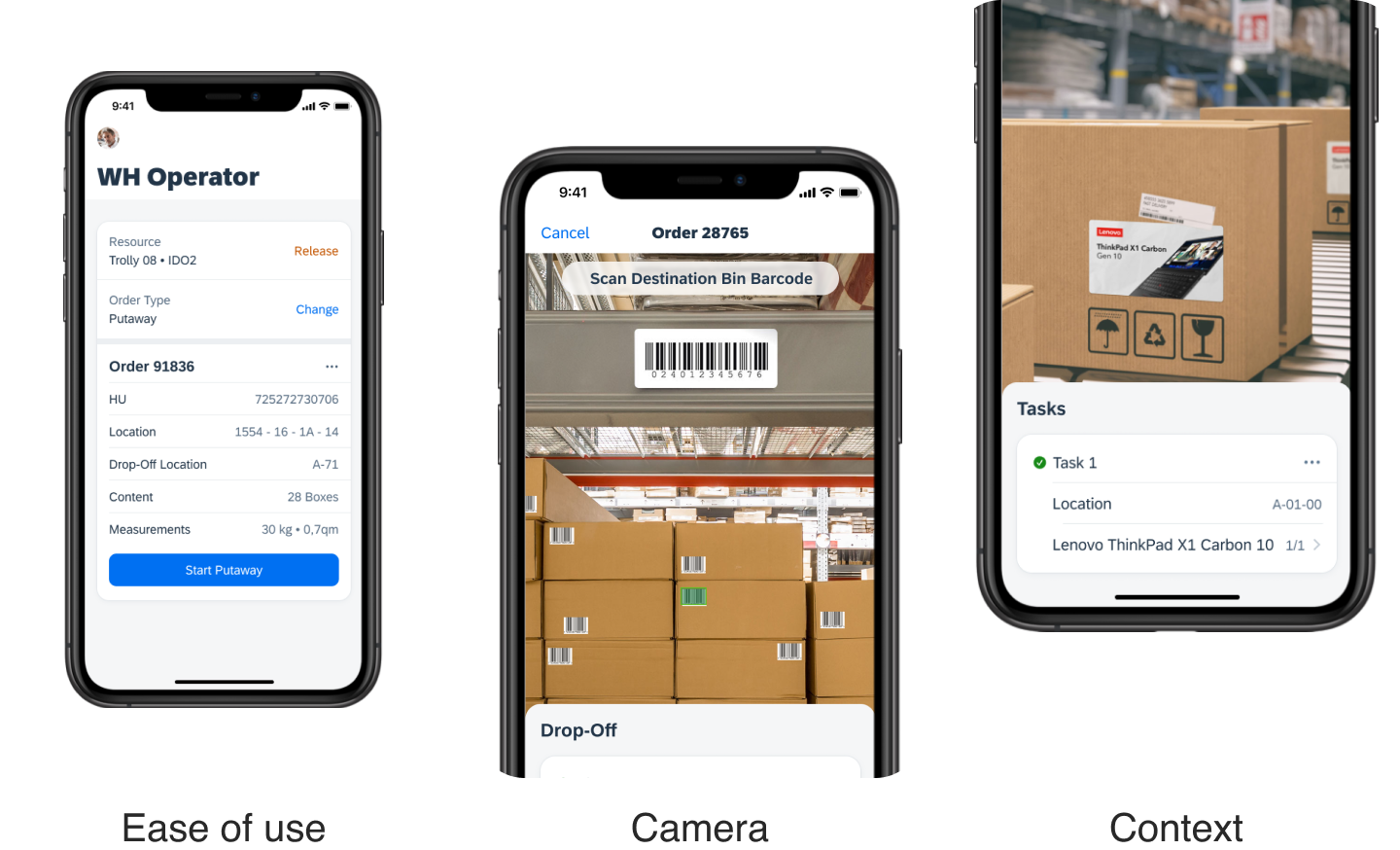
I anchored the entire product to three promises for the user:
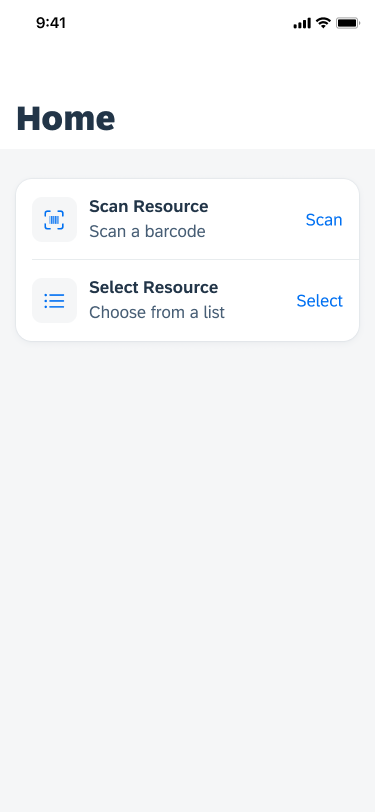
Ease of use — translate EWM's dense interface into clear, obvious actions
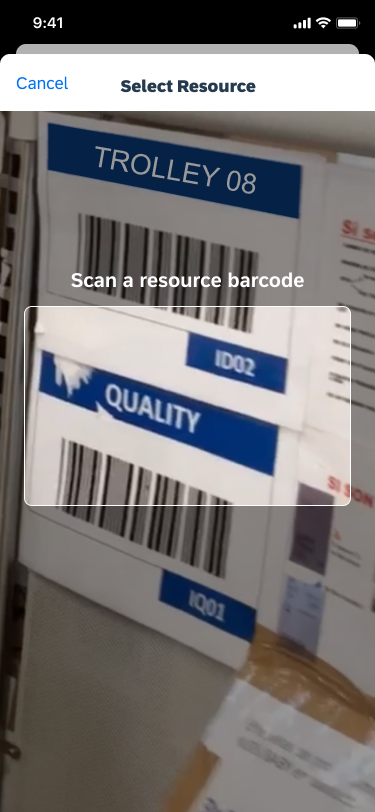
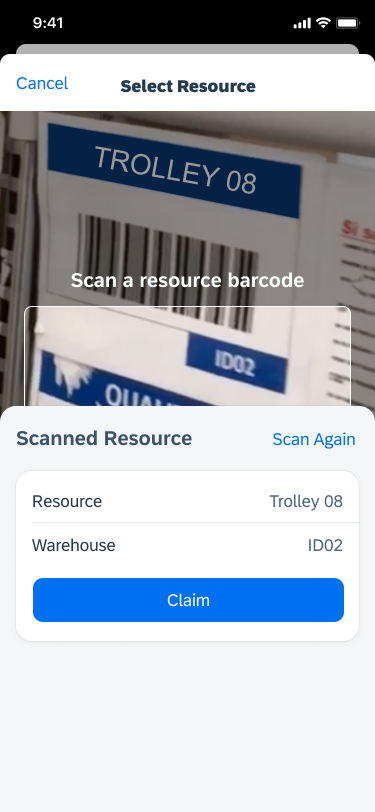
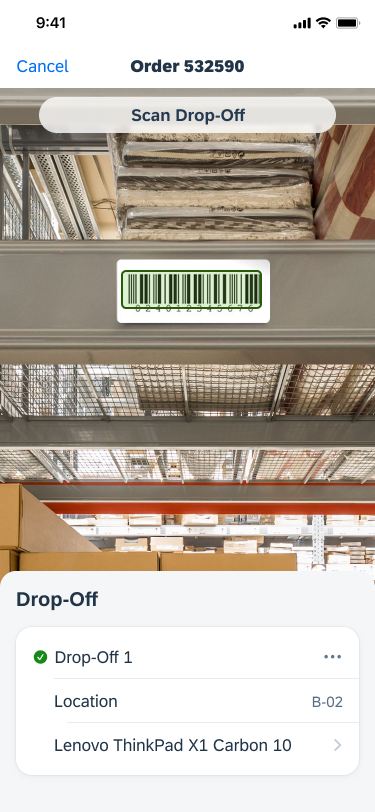
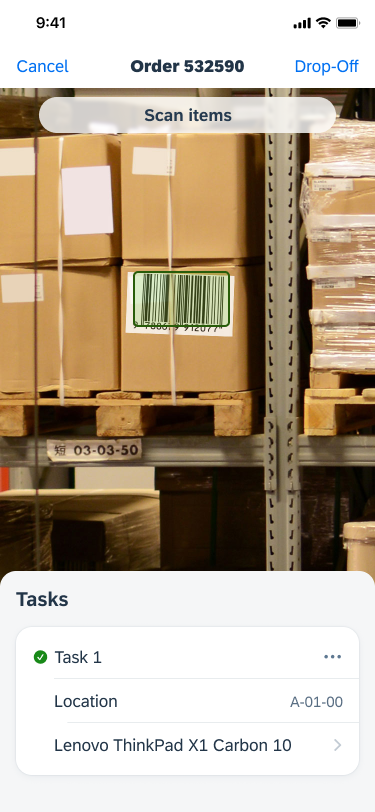
Camera-first scanning — use the phone's camera to read barcodes, QR codes, and text, replacing the laser gun entirely
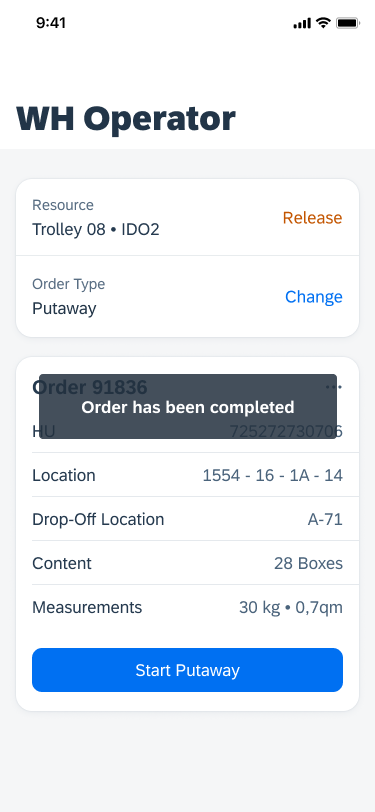
Context — surface only the information needed to finish the task at hand, and nothing more
Rather than design from assumptions, I went into the users' world:
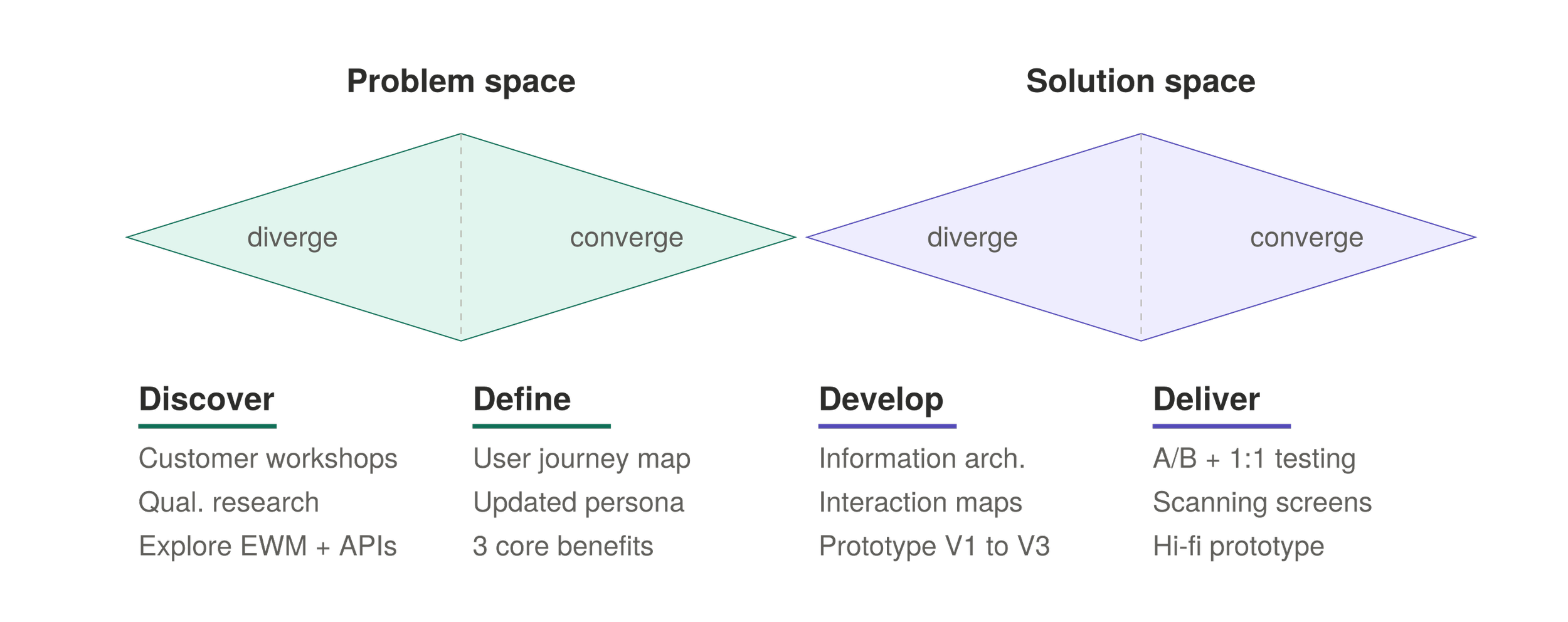
Ran workshops with SAP's existing customers, producing an end-to-end user journey and a refreshed persona to steer every decision that followed
Built the information architecture and interaction diagrams, then turned them into a screen flow and a working prototype
Worked in tight, qualitative research cycles — guided and unguided prototype testing, click-flow analysis, A/B testing, and 1-on-1 interviews
A summary user journey of multiple warehouse workers with pain points, actions and opportunities
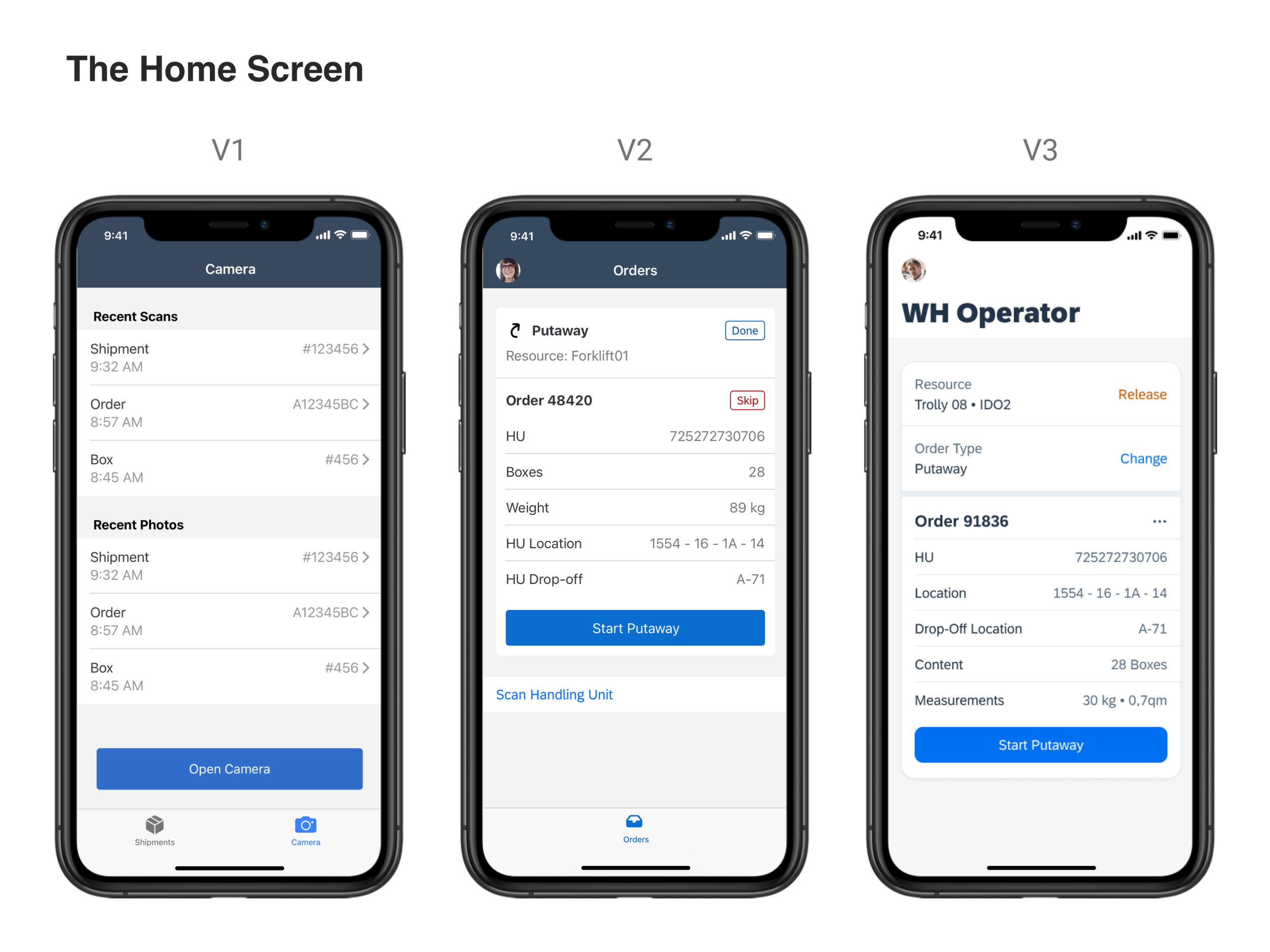
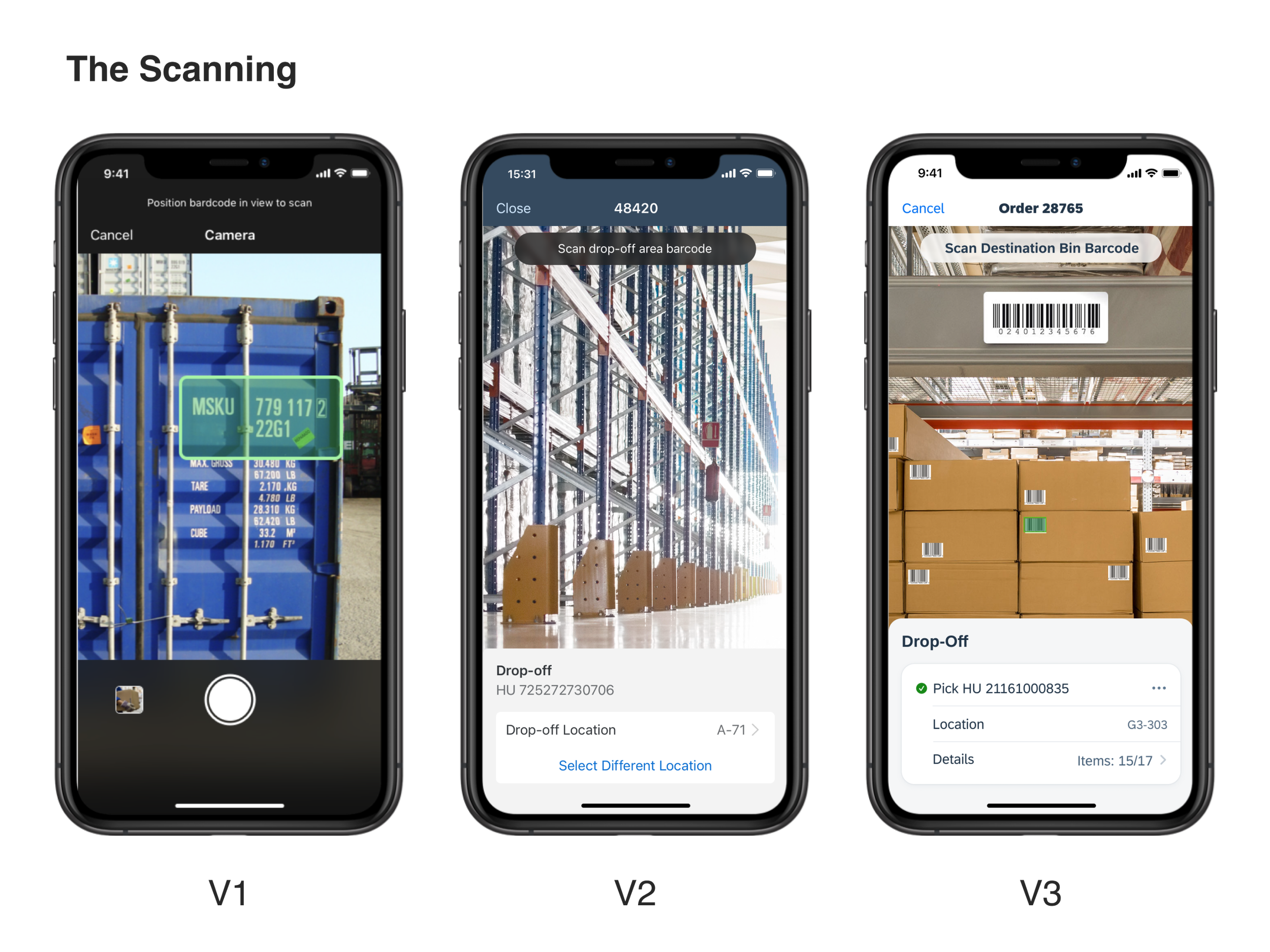
The design evolved across three research-backed versions:
V1: Built collaboratively with the customer and Apple during a 4-day design sprint
V2: After early testing revealed users needed more guidance, I rebuilt around very clear CTAs and minimal distractions
V3: The Final Release pushed further still, with an even cleaner interface and stronger visual hierarchy
With each iteration, I stripped away anything unnecessary, so operators could focus entirely on the task while keeping fast access to every function they might need. The scanning screens, the app's core differentiator, earned the most attention of all.
Key Decisions
1. We chose augmentation over replacement
Research showed operators relied heavily on existing EWM workflows.
Rather than reinventing warehouse management, we focused on reducing friction around the highest-frequency tasks.
2. We made the camera the product
Most stakeholders initially viewed scanning as a supporting feature.
Research revealed scanning was the primary user interaction throughout the day, leading us to make camera performance and workflow speed the center of the experience.
3. We prioritised guided workflows over flexibility
Early testing showed new users struggled with EWM's complexity.
We deliberately traded configurability for clarity in the mobile experience to reduce onboarding time and operator errors.
Information Architecture
Screenflow
Tradeoffs
-
Challenge
Warehouse workers value efficiency over extensive functionality.
Tradeoff
Adding more controls reduces navigation but increases decision-making time.
Decision
Focused every screen on a single task with only essential actions visible.
Outcome
Faster task completion and reduced cognitive load.
-
Challenge
Workers wanted to move quickly, but mistakes were expensive.
Tradeoff
Extra confirmations reduce errors but slow everyone down.
Decision
Added confirmation only where mistakes had significant operational cost.
Outcome
Balanced speed with reliability.
-
Challenge
AR could improve picking but introduced a learning curve.
Tradeoff
An AR-first experience risks lower adoption among experienced workers.
Decision
Designed the AR experience to pickup exactly where the operators were having major problems in their workflows to maximise adoption rate.
Outcome
Operators seemed to have a higher initial learning curve but quickly adapted and improved workspeed by ~25-30% longterm.
Outcome
The Warehouse Operator shipped as a full public release on the App Store, not a concept or a pitch, but a product operators use in live warehouses. SAP has fully supported and maintained it for years since launch, validating the camera-first approach as a genuine alternative to the legacy laser-gun hardware.
~30% faster onboarding for new warehouse employees, thanks to the clear, guided interface that replaced EWM's dense legacy screens
More than 3× faster scanning in some cases, with the phone camera outperforming the old handheld scan guns
Long-term adoption: years of continued SAP support, proving the product earned its place against a system customers had relied on for over a decade
Most importantly, the project achieved its primary objective: providing customers with a compelling reason to move away from legacy workflows that had remained unchanged for more than a decade.